Thursday, 24 November 2016

Monarch Butterfly Monitoring in Portugal and Spain

Monarch Butterfly Colonies in Portugal and Spain
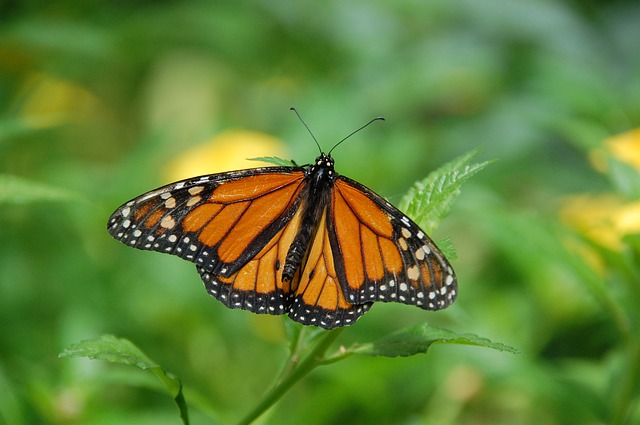
Monarch (Photo: Public Domain)

I have been wondering what happens to monarch butterflies (Danaus plexippus) that emerge from their chrysalises in the late autumn in Portugal and Spain. I am wondering if there are any organisations or individuals out there that know or are monitoring the colonies and populations of these insects.

Migratory Monarchs

It is common knowledge that these beautiful butterflies conduct an incredible migration from Canada and the northern states of America down to Mexico and California in the south of the US each fall, and then repeat the journey in the opposite direction with the coming of spring.

Overwintering Monarchs (Photo: Public Domain)

The monarchs overwinter in vast numbers that cling to trees. Conservationists have become rightly concerned about the diminishing numbers of monarchs that are arriving to overwinter and that are successfully accomplishing this essential part of their life cycle. Forests in Mexico are being destroyed and freak winter weather due to Climate Change is taking a toll.

In America the subject of monarch migration is being taken very seriously and efforts are being made to monitor the numbers of these butterflies. If you search online for “monitoring of monarch butterflies” you will find plenty of relevant entries for America but not so if you search for “monitoring and distribution of monarch butterflies in Portugal and Spain.” Yes, there are plenty of results but none that I can find that tell you much about the populations in the Iberian countries, only that they exist. It is known that monarchs can be found on the Azores and in Madeira too, as well as the Canary Islands, which count as part of Spain.

Monarchs in Portugal

I have a book I bought in Portugal entitled thebutterfliesofportugal, edited by Ernestino Maravalhas and published by Apollo Books, and it has a distribution map for the monarch butterfly. It is shown as living in the Aveiro area on the northern coast and along the coast of the Algarve in the south.

Monarch caterpillar (Photo: Public Domain)


I have recently obtained some monarch caterpillars from a butterfly farm in Aveiro but the owner tells me there are no monarchs in the north in winter.  I have the food-plants scarlet milkweed (Asclepias curassavica) and the bristly fruited silkweed (Gomphocarpus fruticosus) growing here on which the caterpillars are feeding.

Bristly Fruited Silkweed  (Photo: Public Domain) 

Incidentally it is these plants that have been introduced into Iberia as garden plants that have enabled the monarch to colonise Spain and Portugal. The same goes for Tenerife and the Canary Islands where the scarlet milkweed is often grown as an ornamental garden flower.

Monarch on Milkweed (Photo: Public Domain)

I have successfully reared many monarch butterflies in Tenerife when I lived on the island where there are non-migratory populations, and I know that the insects there continue flying and breeding in the warmer coastal areas through the winter months when it becomes too cold and their food-plants die back in the mountains and higher ground. But I am wondering if the situation is the same in Portugal. If so what temperatures do all stages of the insect need to survive and complete their life-cycle? I estimate my caterpillars are going to need a week more here before they will change into chrysalises and probably a bit longer before they emerge than the ones I have reared before in the slightly warmer part of Tenerife where I lived. I estimate that the butterflies will be emerging late in December but what will they do if I set them free, allowing for sunny and warmer winter days here in Portugal. Will the monarchs attempt to overwinter, will they die doing so or will they fly south?

I have been trying unsuccessfully to find out in searches on the Internet but most information I find is mostly about the migratory monarchs in the US.


I know that the milkweed and bristly-fruited silkweed can continue growing throughout the winter here so the food-plants are available, but I don't know whether it simply gets too cold for any stage of the monarch’s life-cycle to survive.  Anyone reading this who can tell me more about the monarchs in Portugal and Spain, please get in touch or leave a comment.

Monday, 21 November 2016

Forest Farm and Glamorganshire Canal are Great Places for Nature

Forest Farm Reserve and the Glamorganshire Canal


Photo: Steve Andrews

Just on the outskirts of Cardiff lies a wonderful area for nature that I have been visiting since I was a boy. I am talking about Glamorganshire Canal and the Forest Farm Nature Reserve, which offer long stretches of freshwater, pools and wetland habitats, forests and fields.

Photo: Steve Andrews


There are several ways to get there but I usually walk up through Hailey Park in Llandaff North and continue along Ty-Mawr Road that goes past the old Melingriffith Tin and Iron Works and the old water wheel which is still there as a relic of the South Wales industrial past. The Melingriffith Works that were founded sometime before 1750, closed in 1957.  At the end of the road you reach the end of Velindre Road, which is part of the suburb of Whitchurch.


Here you can either go into the Forest Farm reserve or wander along the banks of the canal, which ends below Tongwynlais and in the area of the Coryton Interchange. It is also possible to get there by crossing the River Taff from Radyr.

Herons and Kingfishers


Photo: Steve Andrews

Birdwatchers can easily spot herons in this area and if lucky you can get a glimpse of the kingfisher too as it hunts for prey in the waters of the canal. I remember seeing one there many years back and it inspired me to write a song, aptly entitled "Kingfisher."

Mallard ducks are very common here and can be seen on the Glamorgan Canal and on the feeder which runs alongside it, as are moorhens. Water rail, snipe, dippers and reed warblers are also reported from Forest Farm Reserve. Even the elusive bittern have been seen here.

Photo: Steve Andrews


Beech and Oak

Beech and oak are the main trees that grow alongside the Glamorganshire Canal and in the Long Wood. Some of the trees are said to be 200 years old. In autumn the dead leaves in their brown and golden autumnal shades can be seen coating the ground and floating on the canal’s surface.

Common Toads
Common toads gather to spawn in the canal in springtime, and I remember when some ponds many miles away on the banks of Llandaff Weir were destroyed many years ago. I remember seeing toad tadpoles in the canal that year and wondered if it was possible that some of the displaced toads had somehow found the canal even though it was miles away. I often wonder what amphibians do when they return to spawning grounds to find them gone.

Grass Snakes
I have seen grass snakes swimming in the Glamorgan Canal too. It is good to know these once much more common reptiles, have found a home here.

Waterlilies
In summer the surface of a lot of the Glamorgan Canal is covered by the large rounded leaves of the yellow water lily. However, when I recently visited in late autumn they had all died back. Nevertheless, I really enjoyed my recent walk along this canal that is an interesting place to visit all year around.

Photo: Steve Andrews

Wednesday, 28 September 2016

Where have all the British butterflies gone?

British Butterflies conspicuous by their absence

Small Tortoiseshell (Photo: Public Domain)
I have been in the UK since the end of August and have been sad to find that many once common British butterflies are conspicuous by their absence. It needs to be asked: where have all the British butterflies gone?

I remember a time when buddleia (Buddleia davidii) bushes were rightly also known as butterfly bushes, a time when you could count on seeing many species of butterfly feeding on the nectar provided by the colourful and perfumed flowering spikes. Those days, it seems, have long gone.

 Peacock on Buddleia (Photo: Public Domain)

Butterfly species that feed on Buddleia

Small White on Buddleia (Photo: Public Domain)
There used to be a butterfly bush in my father’s garden in Cardiff on which on a sunny day you could expect to see several small tortoiseshells (Aglais urticae), a peacock (A. io) or two, one or more red admirals (Vanessa atalanta), a comma butterfly (Polygonia c-album), several small whites (Pieris rapae) and a large white (P. brassicae) all at the same time. Now you are lucky to see a single butterfly. 

 Red Admiral on Michaelmas Daisies (Photo: Public Domain) 

At time of writing we are approaching the end of September, and despite the UK having had some very warm and sunny days, my butterfly sightings have been at an alltime low. Now you may be thinking, well, it is autumn, but the season shouldn’t matter. Hibernating butterfly species feed up in September and October too to help sustain them through the winter months ahead. The buddleias have mostly finished now but michaelmas daisies (Aster amellus) and orpine (Sedum telephium) are two commonly planted garden flowers that butterflies love, but this year the butterflies are missing.

It is not only flowers that butterflies will feed from. Red admirals, in particular, have a liking for rotting fruit and enjoy feeding in late summer and autumn on windfall fermenting apples and pears. There are plenty of apple and pear trees about but again a real shortage of butterflies. 

Reasons for the butterfly decline

The disappearance of so many British butterflies is a very worrying issue, not just because of the great beauty of these winged insects that we all enjoy seeing, but because it shows that all is not well in the environment. If butterflies are vanishing this will have an adverse effect on other creatures that feed on them. Many birds eat caterpillars, for example, so their numbers are affected by a shortage of food.

Many reasons have been put forward for the serious decline in many species of British butterfly, ranging from pesticides and herbicides, pollution, disease, parasites and Climate Change. A change in farming practices is another reason so many species are thought to be dwindling in numbers. 
 Comma on Buddleia (Photo: Public Domain)

Red admiral, small tortoiseshell, peacock and comma butterfly caterpillars all feed on stinging nettles (Urtica dioica) and there is no shortage of this plant, although I have seen it deliberately destroyed by herbicide.

The decline of the small tortoiseshell has been a real mystery, and a warm winter followed by a chilly spring, is thought to have done a lot of harm to this pretty species.

2016 has been recognised by scientists monitoring the situation as a very bad year for butterflies, and it can only be hoped that next year is a lot better. How many butterflies have you seen this year?